
Milestone Functional Safety: The Path to SIL Certification for Series 35 & 37
Following an intensive audit by TÜV Rheinland, we have successfully completed SIL certification for our force-controlled solenoid valves. Learn more about the journey from meticulous documentation in the safety plan and SRS through to successful in-house inspection and our commitment to your system safety.
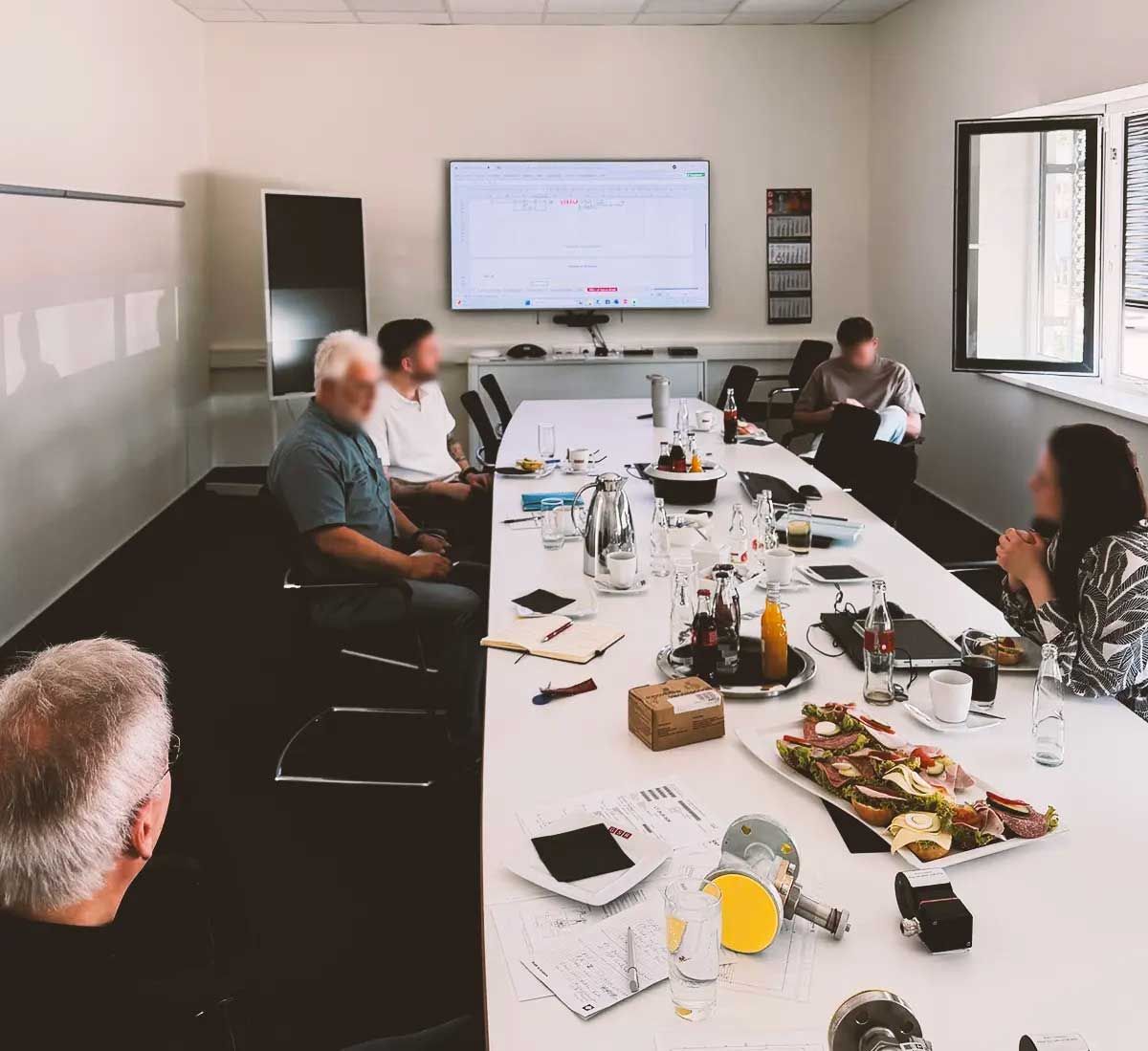

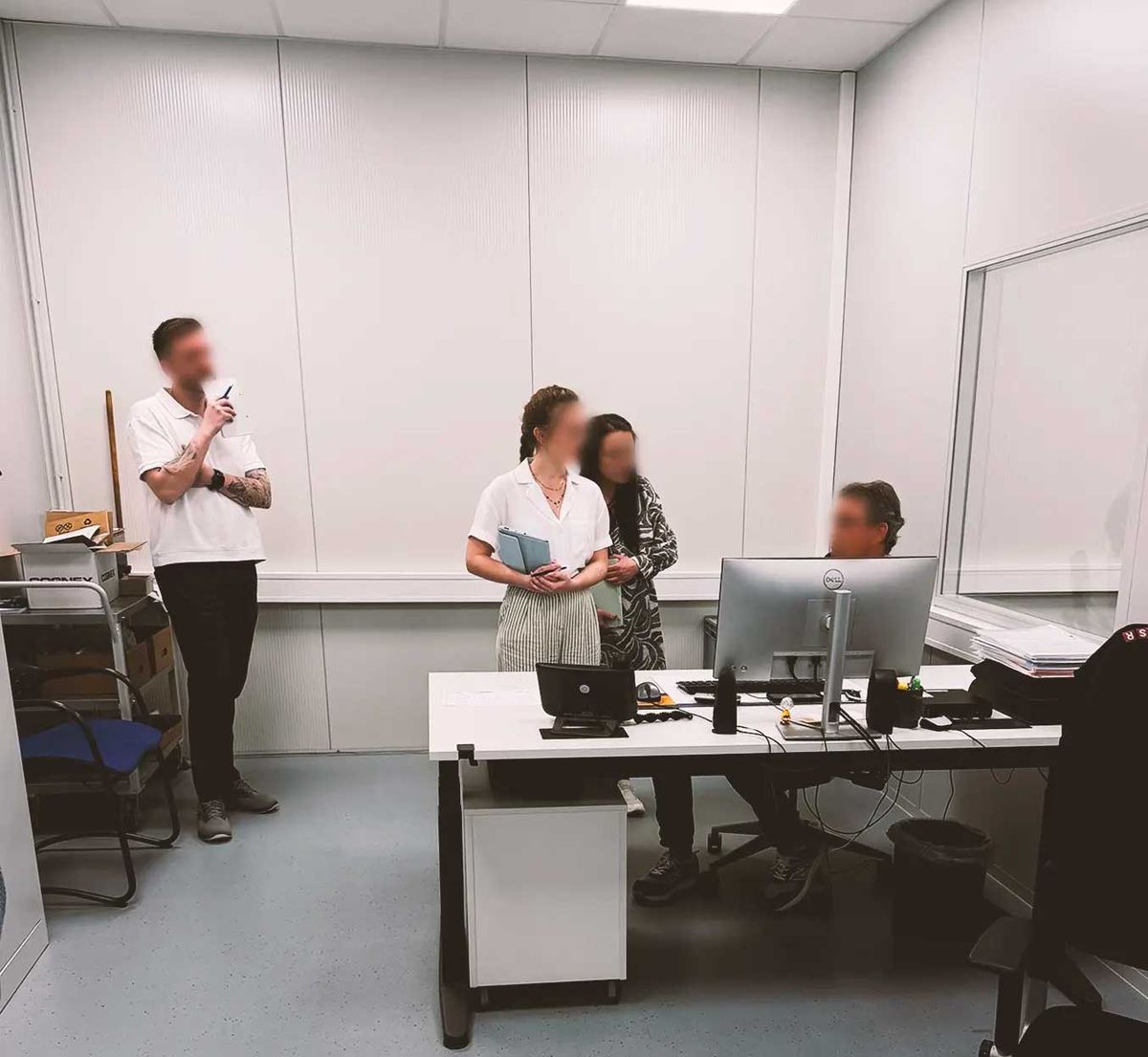
Vlotho, July 2026 – We have done it! After months of intensive preparation and meticulous documentation work, we have reached one of the most significant milestones in our recent company history: the successful SIL certification of our force-controlled solenoid valves of the Series 35 and Series 37 by TÜV Rheinland.
Transparency and Safety Through Certification
When we talk about SIL 2 (or SIL 3 in redundant configuration), it is about far more than a technical specification. It is about the confidence of our customers that our valves will safely close within a maximum of 1000 milliseconds in the critical moment – for example, during an emergency stop in an industrial system.
This "Safe State" (NC – de-energised closed) is the heart of our fittings. But before TÜV Rheinland on 29 May 2026 successfully certified the final audit, it was a long journey that challenged us as a team.
The Audit
The two-day on-site audit was the final maturity test. An expert from TÜV Rheinland not only examined our theoretical concepts, but conducted an in-depth on-site inspection. Along a strict guideline, all stages of our value chain were audited:
- From goods receipt to dispatch: How do we ensure that only certified materials are installed?
- Personnel & Competence: Do our employees have the necessary expertise in the field of functional safety?
- Production & Final Testing: Is every valve tested under real conditions before it leaves our facility?
Documentation as the Foundation for Safety and Compliance
A central building block was our Functional Safety Management (FSM). Anyone who thinks SIL is just about calculations is mistaken. The majority of the work is in the conscientious creation of technical "preliminary documents":
- Safety and V&V Plan: Our roadmap for the entire safety lifecycle.
- Safety Requirements Specification (SRS): Here every requirement is formulated so precisely that it is directly testable and verifiable.
- Safety Manual: The "bible" for the operator, which contains all safety-related parameters such as the dangerous failure rate of 39 FIT.
Responsibility Through Teamwork
The success achieved is based on the cooperation of the departments involved. Operational management assumed coordination between sales requirements and their engineering and development implementation. Through close cooperation between safety management, development and construction, it was ensured that the requirements of EN 17955:2024 and IEC 61508 were considered and implemented in the development and implementation process.
Inspection
The checklist for the on-site inspection by TÜV Rheinland serves to ensure that, in addition to the existing quality management system (ISO 9001), sufficient measures have been taken for a Functional Safety Management System (FSM). The aim is to verify that sustainably high quality of safety-relevant products is assured.
According to the guideline, the inspection includes the following detailed inspection points:
Core Areas of Physical Inspection
During the tour, three stations in particular are examined closely:
- Goods Receipt: Here, it is checked how it is ensured that only specification-compliant materials enter the facility. In your case, this is particularly critical for traceability to material level (e.g. through 3.1 batch material certificates for housings).
- Production: It is evaluated how safety-relevant products are handled, whether calibration procedures for tools are adhered to and whether personnel are sufficiently qualified.
- Shipping Preparation: Verification of processes that ensure only tested and properly documented valves leave the facility.
The 10 Focal Points of the Checklist
Inspectors ask questions about the following subject areas and request corresponding evidence:
- Fundamentals of the QM System: Evidence of ISO 9001 certification and implementation of internal/external audits.
- Personnel Management: Evaluation of the training culture and specific knowledge in functional safety among involved employees.
- Procurement: Evidence of processes and responsibilities specifically for SIL-relevant components.
- Sales: Handling of SIL products in the sales process.
- Traceability & Complaints: Processes for handling errors and continuous improvement.
- Test Laboratories: Evaluation of testing capabilities and calibration procedures.
- Development: Verification of internal processes for design, review and in particular change management.
- Production: Detailed evidence of responsibilities in handling SIL valve series
- Final Inspection: Verification of testing procedures and associated documentation.
- Additional Project-Specific Questions: These include questions on FMEDA (Failure Modes, Effects and Diagnostic Analysis) to specific locations or special customer requirements.
This systematic inspection ensures that the theoretical processes described in your manuals (MRS, SRS, Safety Manual) are actually implemented in daily practice.
Manufacturer's Certificate
The 3.1 Acceptance Test Certificate, the official manufacturer designation, is of central importance for SIL compliance of the solenoid valves of Series 35 and 37 for several technical and normative reasons:
- Avoidance of Systematic Errors: The use of 3.1 certificates is a crucial measure in Functional Safety Management (FSM) to exclude systematic errors in production and material procurement. Through this evidence, it is ensured that the components and materials exactly comply with the requirements that were calculated for the SIL assessment.
- Ensuring Material Integrity: The certificate verifies the material integrity of the pressure-bearing components. This is particularly essential for meeting the media compatibility requirement, as the safety of the fitting directly depends on the durability of the materials against the process medium.
- Complete Traceability: Via the unique production order number on the valve housing, complete traceability is guaranteed.
- Validation of the Safety Lifecycle: In the "Production" phase of the safety lifecycle, the chargeable batch material certificates serve as evidence to confirm the conformity of the manufactured hardware with the certified design.
The chargeable 3.1 certificate confirms that the supplied valve conforms to the design that forms the basis of the SIL assessment and the determined dangerous failure rate of 39 FIT. Therefore, SIL compliance of the specific device is linked to this certificate.
Outlook
The official certificate from TÜV Rheinland will be issued shortly. For our customers, this means: maximum operational safety and a partner who takes responsibility for functional safety seriously. Whether in biogas plants, the chemical industry or hydrogen technology – our Series 35 and 37 are ready for the future.
Marc Langejürgen Managing Director Buschjost Magnetventile GmbH & Co. KG